Pages

Saturday, June 16, 2012

The Jockey & the Sheik


A long time ago, perhaps before you were born, in pre-Conciliar times, there existed in Ireland a company called Veritas, meaning Truth, which published devotional and other religious pamphlets.

Now, at this time, Ireland was very poor, but, in part due to her unquestioning Roman Catholic faith, she was producing more children than she could support. So, when they grew up, many of them went to Pagan England to seek their fortune.

Because they were not used to questioning their faith at home, they were easy prey to Proselytising Protestants in this alien land. So Veritas produced a little booklet entitled Handy Answers to enable them to repel religious boarders, so to speak.

Many of the answers were in the form of little parables which they could learn off by heart, something they certainly had been taught to do at home.

I remember one such parable, which was offered as a reply to the assertion that "One religion is as good as another", and which I would like to share with you.

Unfortunately I don't have my copy of the original booklet, and it was clearly so popular in its day that Veritas don't have one either. So I am going from memory.

Before I actually launch into the parable, I would remind you that in those days all of these sort of publications needed a Nihil Obstat and an Imprimatur before they could be published. The former, awarded by an appropriately qualified theological person, ensured that there were no doctrinal errors in the text, and the latter was the final permission of the local bishop to publish.

So, "One religion is as good as another?".
"Not so, and to prove it, let me tell you a little story"
Once upon a time there was a Jockey who had become friendly with a Middle Eastern Sheik. One summer, when the Jockey was visiting the Sheik, the latter confided in him that he had a little problem and that the Jockey might be the very man to help him sort it out. It appears that, once a year on a particular "feastday" the Sheik took a special bath and the bathwater was bottled and distributed to his followers, who drank it and thus benefitted from appropriate blessings from Allah. This year, however, the Sheik was suffering from a dreadful cold which he did not want to pass on to his followers, so he asked the Jockey if he would have the bath in his place. The Jockey was only too happy to oblige his friend and the bathwater was duly distributed to the Sheik's followers who drank it and all of whom died. So one religion is not as good as another.
I swear to God!

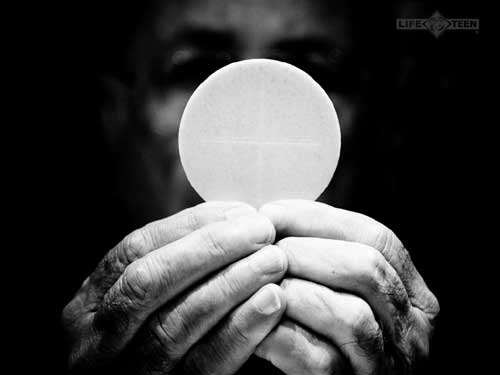
If you doubt me for a minute, hover the cursor over the picture above.

Wednesday, June 6, 2012

A Particular God


Hover the cursor


I have been particularly disturbed at not having been invited to present my paper (below) to the IEC2012 Theology Symposium in Maynooth this week, despite my posting my availability in plenty of time.

Perhaps it was felt that the theology or the physics were too advanced or obscure for a gathering that would include non-theologians and non-physicists.

I have therefore tried to circumvent the complexity by constructing the image above.

Moving the cursor over and away from the image gives an idea of the dynamics involved.


My Paper
Transubstantiation and the Higgs Boson particle
by Benny

In what may be a vain attempt to update the concept of transubstantiation I thought I might explore it in conjunction with the Higgs Boson particle, or the God particle as it is sometimes known.

As an Atheist I am a firm believer in the "God of the Gaps". When the gaps in our knowledge of how the world worked were large, God was big. With advancing science s/he is now reduced to a single particle, admittedly one which fills the whole of space.

As an increasing proportion of the working of nature is explained by science, the scope for a personal interfering God has diminished. Those occasions when the rules of nature are broken or stretched by the Divine Being to facilitate mankind are few and far between. The sun stopping in the sky at Fatima in 1917 is one such occasion and the miracle is, of course, not that the sun stopped, but that we didn't all fall off the earth and into deep space.

There are a few areas, though, where the tabloid theology on which I was brought up still subsists. The RC church has its head in the sand on many issues, not least of which are contraception and homosexuality. But, in general, it has tried to adapt to modern science within the limitations imposed by its premature and foolish declaration of papal infallibility and the abusive way in which that dogma has been put to use.

However, the most glaring area in which the RC church is stuck in a tabloid theological timewarp is transubstantiation. The Protestants have cleverly never allowed themselves to be trapped in this one. Communion for them is a commemoration in which Christ participates in spirit. Can't be proven but equally can't be contradicted.

The RC version has been that Christ is physically present but has taken the form of bread and wine. That is the meaning of the real presence. But it surely wears a bit thin when you get down to the subatomic particle level. The area remaining for the real presence to hide in has got infinitesmally small and may soon not exist at all.

And at the housekeeping level there has always been the problem of what to do with the crumbs and the water in which the holy containers have been washed.

But the RC church is hoisted on its own pétard and the likelihood is that the Higgs Boson will kill off the real presence once and for all. One positive effect might be that an issue which has, unnecessarily and scandalously, divided Protestant and Catholic may be no more.

If this happens, and the idea of the Holy Spirit working through the people rather than through papal infallibility takes hold, then Catholics and Protestants will have to find something else to fight about.

It looked for a brief instant in time, at Vatican II, that this was about to happen. But the Holy Hijack put an end to all that sort of nonsense.

Nearly half a century after Vatican II, it looks like some of the ideas then rubbished by the Curial elements in the Vatican, may be coming round again. If that is the case, it might behove RC adherants to join with their siblings in the House of Israel and beyond, stop the squabbling and work for a better, more tolerant and rational world.

Amen.

Benny was brought up a Roman Catholic but somewhere along the way he lost the faith and didn't bother trying to find it again. He though of submitting the above thoughts in response to a call by the Hierarchy for papers for the International Eucharistic Congress to be held in Dublin in June 2012, but eventually thought the better of it.

He lives, by choice, on Dublin's Northside from which Bono migrated to Killiney, an area where Benny resided for many years before Bono's arrival.

He holds an MA in Economics (UCD 1967) which he considers fits him perfectly to discuss the many issues currently facing the Church to which he formerly owed allegiance.


Sunday, June 3, 2012

L'Ultima Cena


Given the identity of the Eucharist and the Last Supper, I am surprised that nobody has drawn attention, in the context of the Eucharistic Congress, to the mural (above) in Blooms Lane, in the Italian Quarter of Dublin.

Might this have anything to do with the current misfortunes of developer Mick Wallace TD? Or might it be the uncomfortably secular nature of this particular rendering of that meal.

The characters are based on real people, invited in off the street, so to speak, and as such represent a cross section of Dublin passers by. An ideal image for a congress structured around the theme of "communion", you might think. There is even the resonance with the wedding feast of the Gospels.

Well, just to redress the imbalance I thought I'd mention John Byrne's Last Supper located slap bang in the middle of Mick Wallace's development.

While I'm at it I notice that Pat Igoldsby has not been included in the list of speakers for the Congress. I assume he was not invited, but have to admit I don't know whether or not he would have accepted such an invitation. Pat is as much a part of Dublin as the GPO and way more articulate than your average postage stamp.

As a modest contribution to redressing that imbalance, I have reproduced his poem "The Last Supper" below. I'm sure Pat won't mind. He's sort of laid back about some of this stuff.


LAST SUPPER

The man with nowhere to go
stood under
the cold petrified
night-time tree
in the middle of
O'Connell Street.
Because he had nothing
else to do
he joined up
all the white dots
which the birds
had dropped
onto the pavement
and he created
a perfect picture
of The Last Supper.
He wandered into it
and ate the bread
and drank the wine
and fell asleep
on the pavement
deep frozen
into the shape
of a cross.


Saturday, June 2, 2012

Those were the days


After the 1932 Eucharistic Congress the Irish Independent brought out a pictorial record which became a treasured possession in many homes. It was a very impressive volume which contained pictures of the main events and of everybody associated with the Congress, cardinals, abbots, committees of every conceivable function. It also had a huge collection of press cuttings on the Congress from around the world.

I have my granny's copy and thought people might like to have a peek at a few pictures which contrast then with now.


These are the Lord Mayor's heralds. Whatever about army trumpeters, could you imagine these guys turning out for real today?


The Governor General, James McNeill, brother of Eoin McNeill (see below) arrives at the Pro-Cathedral for the opening ceremony. One of the things that strikes you looking through the photos is the extent to which the trappings of the ancien régime were still around. Add to this the various papal insignia and uniforms and you might almost be living in a full blown monarchy.


When it came to the civil powers there was no question as to who outranked whom. This famous picture of the Lord Mayor "welcoming" the papal legate at the city gates (in Booterstown) says it all. In fact, on a subsequent visit to the Pope, the Lord Mayor tendered "the homage and the unalterable fidelity of the Citizens of Dublin to the Apostolic See". Note that this included all citizens irrespective of religion.


Another thing that struck me, and reminded me of a monarchy, was the way the legate, and other senior churchmen, seemed to constantly dispense blessings like fairy dust as they passed along the way. It reminded me of the monarch's wave from the royal coach or the rich showering coins on the grateful paupers lining the route.


I mentioned that there were loads of photos of people. I am just including two, which struck me as particularly interesting in view of our more usual historical view of the people concerned. First (above) is Eoin McNeill, the leader who cancelled 1916 and was subsequently Minister for Education in the first Free State Government. He was a speaker at the 1932 Congress.


Eoin O'Duffy, then still Police Commissioner, was the Chief Marshall of the Congress.

I'm sure people will discover other contrasts with this year's upcoming Congress.

I hope that one of the most striking contrasts will be between the pomp and triumphalism of 1932 and the humility, repentance and equality of this year's Congress. We'll just have to wait until after 17 June next to see what lessons have been learned and the nature of today's RC church in Ireland.


Friday, June 1, 2012

ACP and all that


The relatively recently formed Association of Catholic Priests (ACP) is a most interesting development in the tortured history of Irish Catholicism.

It could not have happened in John Charles's day, and more's the pity. But the "moral authority" of the RC Church, for which read "clerical hellfire", has weakened in recent times for obvious reasons.

It is also now fifty years since the calling of Vatican II and it is all too obvious that the inspiration and hope of renewal sparked by that Council have not only petered out (scuse the pun) but have been actively traduced by a centrist power clique who place the continuity and supremacy of the institution above the welfare of its flock (scuse the mutton metaphor).

In pulling up the drawbridge, the Vatican has forbidden even discussion of a number of controversial issues, and in response to reasoned attempts to raise these issues in a way seen as vital to a healthy community, has called down holy fire and brimstone on the heads of those who have dared to raise them above the parapet.

The ACP, which now numbers around a thousand priests, is attempting to initiate this discussion within the RC church in the long term interest of the church itself (defined as the people of God rather than the Roman Curia).

Their site is well worth a visit, as is Fr. Hoban's brief exposé of their raison d'être. You will find many thoughtful posts and comments.

The discussion is on much more polite lines than I am normally given to myself, and it is conducted in a context of caring and of loyalty to what might best be described as the Church of Christ. That does not in any way inhibit those who feel the ACP itself is a source of heresy and potential schism from forcefully expressing their views.

One of the more intriguing aspects of the emergence of the ACP is the deafening silence of the Irish hierarchy. The emergence of the ACP has certainly put it up to the bishops, but these have so far been found wanting. The recent posting by the ACP of Hans Küng's letter to the bishops worldwide may be an indication of their impatience at the lack of response of the Irish bishops to ACP invitations to dialogue. You could be forgiven for thinking the bishops are busy circling the wagons.

This is all the more surprising as Ireland launches into the Fiftieth International Eucharistic Congress in Dublin this month. The theme of the Congress is "communion". Communion with whom?